

Introduction
In today’s fast-moving digital economy, almost everything has shifted online — banking, shopping, communication, and now gambling. Among the many digital tools driving this transformation, one stands at the center of the online wagering experience: the Virtual Betting ID. While it may appear to be just a simple login credential, it represents a gateway into a highly sophisticated and algorithm-driven betting environment.
A Virtual Betting ID is more than just a username and password. It acts as a personal access key that connects users to virtual sports simulations, online casino games, instant betting markets, and digital financial transactions. With just a few taps on a smartphone, anyone can enter a 24/7 betting ecosystem where matches never stop, results are generated in seconds, and money moves instantly.
The rapid rise of virtual betting platforms has made participation easier than ever before. There are no physical boundaries, no waiting for real-world sporting events, and no need to visit traditional betting shops. Everything operates in real time through digital systems. This convenience, combined with speed and accessibility, has contributed to the growing popularity of Virtual Betting IDs worldwide.
However, behind the simplicity of account creation lies a deeper structure powered by data tracking, behavioral analysis, probability algorithms, and continuous engagement mechanisms. Every action performed under a Virtual Betting ID — from deposits to betting patterns — is recorded and analyzed. This digital footprint shapes the user’s experience and often influences future interactions.
As virtual betting continues to expand globally, understanding the role, function, and impact of a Virtual Betting ID becomes increasingly important. It is not merely a technical requirement for access; it is the foundation of a modern gambling system built on automation, personalization, and speed.
This article explores what a Virtual Betting ID truly represents, how it works, the psychology behind its use, and the broader implications it carries in today’s digital betting landscape.
Understanding the Structure of a Virtual Betting ID
To fully understand the concept of a Virtual Betting ID, it is important to look beyond the surface level. On the outside, it may seem like a simple account profile created with basic personal details. However, internally, it functions as a structured digital identity that connects multiple systems within an online betting platform.
When a user registers, the system generates a unique identification code. This code links to several internal components:
- User profile database
- Financial wallet system
- Betting engine
- Bonus and promotional engine
- Security and fraud detection system
- Behavioral analytics system
Each time a user logs in, the platform retrieves this stored information and updates it in real time. Deposits increase the wallet balance. Placed bets are recorded instantly. Wins and losses adjust the financial record. Bonuses are automatically credited based on activity. Everything revolves around the Virtual Betting ID as the central control point.
Registration and Verification Process
Creating a Virtual Betting ID usually involves a straightforward process:
- Entering basic personal information
- Setting login credentials
- Verifying contact details (email or phone)
- Agreeing to platform terms and conditions
In regulated markets, platforms may require identity verification documents such as national ID cards, passports, or proof of address. This process is often called KYC (Know Your Customer). The purpose is to prevent fraud, underage gambling, and money laundering.
However, in loosely regulated environments, the registration process may be minimal, allowing users to create multiple accounts or operate anonymously. This lack of oversight can increase financial and security risks.
Once activated, the Virtual Betting ID becomes permanently associated with all transactions and activity history unless the account is closed or suspended.
Financial Wallet Integration
One of the most critical features connected to a Virtual Betting ID is the digital wallet. This wallet stores deposited funds and processes withdrawals. Every transaction is recorded under the user’s unique ID.
The wallet system typically supports:
- Bank transfers
- Debit and credit cards
- E-wallet services
- Mobile payment systems
- Cryptocurrency in some platforms
Because everything is digital, transactions are fast and often automated. Deposits may reflect instantly, encouraging immediate betting activity. Withdrawals can vary in processing time depending on platform policies and verification checks.
The speed and simplicity of these financial systems remove many traditional barriers that once slowed gambling behavior. The Virtual Betting ID ensures all financial movement remains traceable within the platform’s database.
Continuous Virtual Events and Algorithmic Systems
Unlike traditional sports betting, which depends on scheduled real-world matches, virtual betting platforms operate continuously. A simulated football match might run every three minutes. Virtual horse races may occur dozens of times per hour.
These events are powered by programmed algorithms and Random Number Generators. While the graphics may resemble real competitions, the outcomes are mathematically determined by pre-set probability structures.
The Virtual Betting ID acts as the bridge between the user and this automated system. Every wager placed feeds into the platform’s calculation engine, which instantly determines outcomes and updates balances.
Because events are constant and rapid, users may place multiple bets within a short period. The faster cycle increases engagement and can intensify emotional reactions to wins and losses.
Personalization and Targeted Engagement
Modern betting platforms rely heavily on personalization. Once a user begins activity under a Virtual Betting ID, the system analyzes patterns such as:
- Preferred games
- Average bet amounts
- Active hours
- Deposit frequency
- Reaction to bonuses
Using this data, platforms generate personalized offers. For example:
- Free bets for frequently played games
- Cashback bonuses after losses
- Time-limited promotions during usual betting hours
This customization is designed to maintain user engagement. Because the experience feels tailored, users may feel a stronger connection to their account.
The Virtual Betting ID therefore becomes more than a login — it becomes a behavioral profile.
The Illusion of Strategy in Virtual Betting
Many users believe that observing patterns in virtual sports can improve their chances of winning. They may track previous results, analyze streaks, or apply betting systems.
However, in algorithm-driven environments, each event is independent unless specifically programmed otherwise. Past outcomes do not guarantee future results.
The design of virtual games often mimics real sports commentary, realistic animations, and statistical displays. This presentation can create the impression of skill-based influence, even when outcomes rely on probability programming.
The Virtual Betting ID reinforces this experience by storing betting history, making it easy for users to analyze past performance — even if that analysis does not change mathematical probabilities.
Risk of Account Misuse and Third-Party Access
In some regions, betting IDs are created and managed by agents. Users may deposit funds through intermediaries rather than directly on the platform. While convenient, this system introduces risk:
- Agents may delay withdrawals
- Funds may be mishandled
- Account access could be restricted
- Disputes may lack clear resolution channels
Sharing login credentials also increases vulnerability to hacking or unauthorized transactions.
Protecting a Virtual Betting ID with strong passwords, two-factor authentication, and private access is essential for security.
Emotional Cycle and Behavioral Patterns
Digital betting environments are designed for rapid engagement. The cycle often follows this pattern:
- Deposit funds
- Place quick bets
- Experience wins or losses
- React emotionally
- Continue betting
Because virtual events occur quickly, emotional decisions can happen without long reflection periods. A single session can involve dozens of betting rounds.
The Virtual Betting ID tracks this entire session, creating a detailed behavioral record. Over time, patterns may emerge that influence future decisions — sometimes increasing risk exposure.
Self-Exclusion and Responsible Gambling Tools
Some platforms provide responsible gambling tools directly connected to the Virtual Betting ID. These may include:
- Daily deposit limits
- Session time reminders
- Cooling-off periods
- Temporary suspension options
- Permanent self-exclusion
When activated, these tools restrict account access or limit activity. However, their effectiveness depends on user willingness to use them.
In unregulated environments, such tools may not be available or strictly enforced.
Long-Term Implications of Digital Betting Identity
As online betting continues expanding, the Virtual Betting ID may evolve into a more sophisticated digital identity. Advanced verification technologies, biometric logins, and AI-driven risk assessments could become standard.
At the same time, concerns about data privacy, user exploitation, and financial harm will likely increase. The more information platforms collect, the greater the responsibility to manage it ethically.
Understanding how a Virtual Betting ID operates — technically, psychologically, and financially — is essential for making informed decisions in today’s digital gambling landscape.
Legal Frameworks and Regulatory Oversight

The legality of a Virtual Betting ID depends entirely on the jurisdiction in which a platform operates. Online gambling laws differ widely across countries. Some governments have fully regulated digital betting markets, while others restrict or ban them entirely.
In regulated markets, betting companies must obtain official licenses from recognized authorities. These authorities typically require:
- Age verification procedures
- Identity authentication (KYC compliance)
- Anti-money laundering monitoring
- Responsible gambling policies
- Fair gaming certification
- Transparent financial reporting
A licensed platform must connect each Virtual Betting ID to verified personal information. This reduces the risk of fraud, underage gambling, and illegal financial activities.
In contrast, unregulated or offshore platforms may allow account creation with minimal documentation. While this may appear convenient, it can expose users to serious risks such as sudden account suspension, refusal of withdrawals, or lack of dispute resolution channels.
Regulation also determines taxation policies. In some countries, winnings may be taxable, and betting companies may be required to report user transactions.
Understanding the legal status of a Virtual Betting ID in one’s region is crucial before participating.
Global Expansion of Virtual Betting Platforms
Over the past decade, digital betting has expanded into emerging markets at a rapid pace. The growth has been fueled by:
- Increased smartphone penetration
- Affordable internet access
- Mobile payment systems
- Youth-driven digital culture
- Aggressive advertising campaigns
Virtual sports are especially popular in regions where access to live sporting events may be limited or where time zones restrict real-time participation.
The Virtual Betting ID enables global connectivity. A user in one country can potentially register on a platform hosted in another jurisdiction. This cross-border accessibility creates both opportunity and regulatory complexity.
As markets expand, competition between platforms intensifies. Companies continuously develop new features to attract and retain users, often leveraging advanced technology to enhance the betting experience.
Technology Driving the Future of Virtual Betting IDs
The next generation of digital betting systems may integrate advanced technologies that reshape how Virtual Betting IDs function.
1. Artificial Intelligence Integration
AI systems can analyze betting behavior in real time. They may detect risky patterns, recommend limits, or personalize promotions with greater precision.
2. Biometric Authentication
Instead of traditional passwords, platforms may use fingerprint scans, facial recognition, or voice identification. This enhances security while simplifying login processes.
3. Blockchain and Transparent Ledgers
Blockchain technology could provide transparent transaction histories, ensuring fairness and reducing manipulation concerns. Smart contracts may automate payouts.
4. Virtual Reality Betting Environments
Future platforms might allow users to enter immersive digital stadiums or casino rooms using VR headsets, with their Virtual Betting ID acting as the identity inside that environment.
5. Advanced Fraud Detection
Machine learning models can identify suspicious activity patterns, preventing account hacking or financial abuse.
These innovations could make Virtual Betting IDs more secure and sophisticated, but they may also increase immersion and user engagement levels.
Economic Implications of Virtual Betting Systems
Virtual betting contributes significantly to digital economies. Governments in regulated markets collect tax revenue from licensed operators. Companies create jobs in software development, customer support, compliance management, and marketing.
However, there are also economic concerns:
- Household financial instability
- Increased consumer debt
- Redistribution of income toward betting operators
- Reduced savings rates among frequent bettors
The convenience of a Virtual Betting ID lowers participation barriers, which can increase overall market volume. While this benefits operators and tax systems, it may also raise concerns about long-term financial well-being for individuals.
Social and Cultural Influence
The digitalization of betting has shifted cultural perceptions. In previous generations, gambling often required visiting physical casinos or betting shops. Today, participation can occur privately through smartphones.
Advertising campaigns frequently present betting as entertainment rather than financial risk. Social media influencers, sports sponsorships, and digital promotions normalize participation.
The Virtual Betting ID plays a central role in this transformation. It removes physical visibility, making betting more discreet and socially integrated into everyday digital life.
For younger adults growing up in a technology-driven environment, creating an online account may feel routine — similar to signing up for social media or streaming platforms.
This normalization can reduce awareness of potential risks.
Ethical Responsibilities of Betting Platforms
Because each Virtual Betting ID contains detailed behavioral data, operators have significant insight into user habits. This raises ethical questions:
- Should platforms limit high-risk users automatically?
- Is it ethical to target promotions toward users who consistently lose?
- How transparent should probability systems be?
- What level of intervention is appropriate when harmful patterns are detected?
Some licensed operators implement responsible gambling monitoring tools that flag risky behavior. Others may prioritize engagement and revenue growth.
The ethical debate centers around balancing business interests with consumer protection.
Identifying Warning Signs of Problematic Use
While many individuals participate casually, excessive engagement can develop gradually. Warning signs linked to Virtual Betting ID activity may include:
- Increasing deposit amounts
- Frequent attempts to recover losses
- Borrowing money to continue betting
- Hiding betting behavior from family
- Spending extended hours on the platform
- Emotional distress linked to wins or losses
Recognizing these patterns early can prevent long-term consequences. Many support organizations worldwide provide confidential help for gambling-related concerns.
Practical Guidelines for Safe Participation
For individuals who choose to engage with virtual betting platforms, responsible habits are essential. Consider the following guidelines:
- Set a strict budget before depositing.
- Treat betting as entertainment, not income.
- Avoid betting under emotional stress.
- Do not chase losses.
- Take regular breaks from digital screens.
- Use built-in limit tools when available.
- Protect login credentials securely.
A Virtual Betting ID should be managed with the same caution as online banking credentials.
Digital Identity and Financial Responsibility
As society increasingly relies on digital systems, personal online identities carry growing responsibility. Whether for banking, investing, shopping, or betting, digital accounts represent access to financial activity.
A Virtual Betting ID is part of this broader digital identity ecosystem. It links personal decisions to automated financial outcomes.
Understanding this connection can help individuals approach virtual betting with awareness rather than impulse.
Final Reflection
The concept of a Virtual Betting ID reflects the evolution of gambling in the digital age. What once required physical presence now operates entirely online through automated simulations and instant transactions.
This digital transformation offers convenience, speed, and accessibility — but it also introduces new risks related to financial management, psychological influence, data privacy, and regulatory oversight.
The Virtual Betting ID is not just a technical necessity; it is the foundation of a system designed for continuous engagement. Every login, deposit, and wager becomes part of a larger digital profile shaped by algorithms and behavioral tracking.
As technology advances and virtual platforms become more immersive, understanding the mechanics behind these systems becomes increasingly important. Awareness empowers individuals to make informed choices, balance entertainment with responsibility, and protect both their finances and personal data.
In a world where digital identities define access to opportunity and risk alike, managing a Virtual Betting ID wisely is not merely optional — it is essential.
Comparing Virtual Betting ID with Traditional Betting Accounts
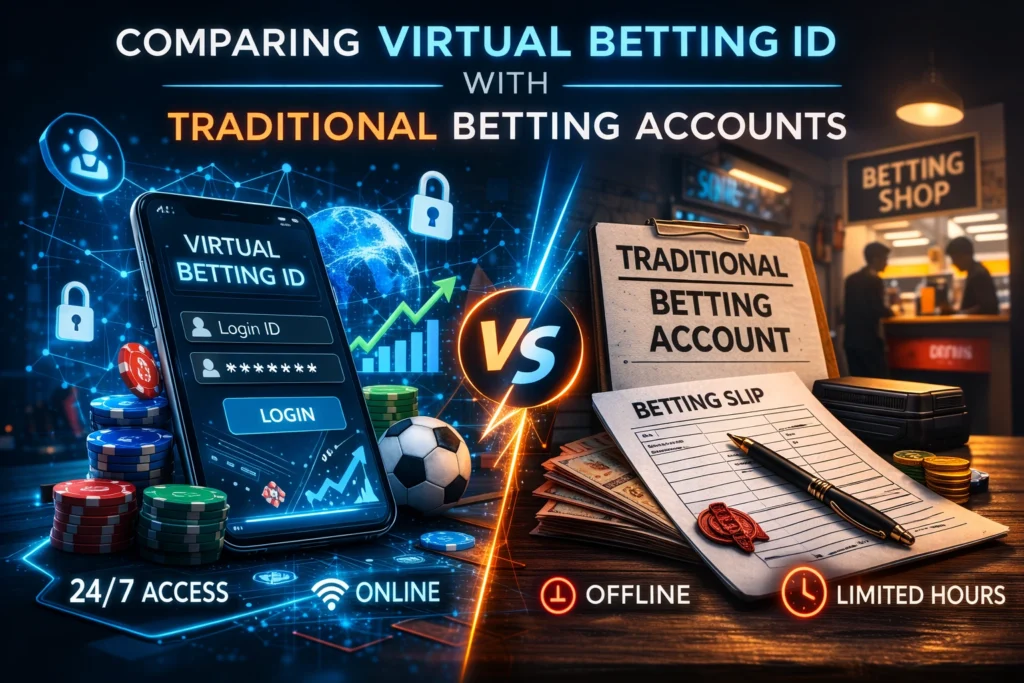
To understand the deeper impact of a Virtual Betting ID, it is useful to compare it with traditional betting methods.
In physical betting shops, customers typically:
- Visit a location during operating hours
- Use cash for transactions
- Wait for real sporting events
- Interact with staff or other bettors
- Experience natural pauses between bets
With a Virtual Betting ID, the structure changes completely:
- Access is available 24/7
- Deposits are digital and instant
- Events run continuously
- No physical interaction occurs
- Betting cycles are extremely fast
The absence of physical friction removes natural stopping points. In traditional environments, distance, cash handling, and social visibility often acted as psychological limits. In digital environments, the Virtual Betting ID eliminates these boundaries.
This shift increases convenience but also increases the need for personal discipline.
The Role of Marketing in Expanding Virtual Betting IDs
Digital marketing plays a significant role in the growth of online betting platforms. Advertisements often highlight:
- Welcome bonuses
- Free bets
- Cashback offers
- Referral rewards
- Fast payouts
When users create a Virtual Betting ID, they frequently enter promotional cycles designed to encourage repeated engagement.
Marketing strategies may include:
- Push notifications
- Email campaigns
- SMS alerts
- In-app promotional banners
- Limited-time offers
These techniques are powered by user data connected to the betting ID. The more a person interacts with the platform, the more refined and targeted the marketing becomes.
This personalization can make offers feel relevant and attractive, reinforcing continued activity.
Bonuses and Incentive Structures
Bonuses are a core feature tied directly to a Virtual Betting ID. Common types include:
- Sign-up bonuses
- Deposit match bonuses
- Free spins or free bets
- Loyalty rewards
- Reload bonuses
While bonuses appear beneficial, they usually come with wagering requirements. This means users must place bets multiple times before withdrawing bonus-linked winnings.
For example, a bonus may require wagering the amount five or ten times before funds become eligible for withdrawal. This encourages extended participation.
Understanding the terms attached to bonuses is essential. Many users focus on the reward without fully considering the attached conditions.
Data Privacy and Digital Footprint
Every action taken under a Virtual Betting ID leaves a digital trace. This includes:
- Login timestamps
- IP addresses
- Device information
- Financial transactions
- Betting behavior
- Communication records
This data helps platforms improve services, detect fraud, and personalize experiences. However, it also creates a large digital footprint.
In regions with strong data protection laws, users may have rights such as:
- Accessing their stored data
- Requesting corrections
- Asking for account deletion
- Limiting marketing communications
In areas with weaker regulations, user data may be less protected.
Because financial and behavioral information is sensitive, users should review privacy policies carefully before registering.
Psychological Triggers Embedded in Digital Design
Modern virtual betting platforms are not only technological systems but also carefully designed user experiences.
Design elements often include:
- Bright visual animations
- Countdown timers
- Realistic commentary
- Celebration sounds after wins
- Instant result displays
These features are intentionally structured to maintain engagement and emotional involvement.
The Virtual Betting ID allows platforms to adjust these experiences based on user behavior. For example, if a person tends to increase bets after small wins, the system may highlight streak statistics or recent outcomes more prominently.
Understanding that digital design influences behavior can help users maintain awareness and control.
The Risk of Multiple Account Usage
Some users attempt to create multiple Virtual Betting IDs to access repeated bonuses or bypass restrictions. However, most licensed platforms use tracking systems to detect duplicate accounts through:
- IP monitoring
- Device fingerprinting
- Identity verification checks
- Payment method tracking
If detected, accounts may be suspended and funds frozen.
Beyond policy violations, managing multiple accounts can increase financial exposure and reduce spending awareness.
Long-Term Behavioral Conditioning
Repeated exposure to fast-paced betting cycles can gradually influence habits. The constant availability of events may train users to seek frequent stimulation.
Over time, this may lead to:
- Reduced patience for slower activities
- Increased risk tolerance
- Heightened emotional response to outcomes
- Difficulty stopping sessions voluntarily
The Virtual Betting ID acts as a personal entry point into this environment. Because the experience is individualized, it can feel routine and integrated into daily life.
Maintaining awareness of usage patterns helps prevent unintended behavioral conditioning.
Financial Management and Budget Planning
A crucial aspect of managing a Virtual Betting ID responsibly is financial planning.
Practical budgeting methods include:
- Allocating a fixed entertainment fund
- Separating betting funds from essential expenses
- Avoiding credit or borrowed money
- Keeping personal financial records outside the platform
- Reviewing monthly spending summaries
Treating betting as a controlled recreational expense rather than an income strategy reduces financial stress.
Digital convenience can make money feel abstract. Actively tracking spending restores clarity.
Dispute Resolution and Customer Support
Occasionally, issues may arise such as:
- Delayed withdrawals
- Bonus misunderstandings
- Technical errors
- Account restrictions
Licensed platforms typically offer customer support through:
- Live chat
- Help centers
- Telephone support
In regulated environments, users may also contact licensing authorities if disputes remain unresolved.
Before creating a Virtual Betting ID, reviewing the platform’s dispute resolution process is wise. Transparency in terms and conditions reduces future complications.
The Broader Digital Gambling Ecosystem
A Virtual Betting ID does not exist in isolation. It operates within a larger ecosystem that includes:
- Payment processors
- Software developers
- Licensing authorities
- Marketing networks
- Affiliate partners
- Data analytics firms
Each component plays a role in shaping the user experience.
The ecosystem continues evolving with new technologies and market demands. As competition grows, platforms seek innovative methods to attract and retain users.
This constant innovation increases convenience but also complexity.
Education and Awareness as Protective Tools
The most effective safeguard in the digital betting environment is informed decision-making.
Understanding:
- How probability systems operate
- How bonuses function
- How data is collected
- How emotional triggers work
- How financial limits protect stability
Empowers individuals to approach virtual betting thoughtfully.
A Virtual Betting ID should never be created impulsively. It represents entry into a structured financial system with both entertainment potential and financial risk.
Conclusion: Digital Identity in a Risk-Based Environment
The rise of the Virtual Betting ID reflects a major transformation in how gambling operates in the digital era. What was once limited to physical betting counters has now evolved into a fully online ecosystem driven by automation, speed, and personalization. A simple login credential now functions as a gateway to continuous virtual events, instant financial transactions, and data-powered engagement systems.
Through a Virtual Betting ID, users gain access to platforms that operate around the clock. For example, platforms like diamondexch99 provide structured access to online betting environments where virtual sports and wagering opportunities are constantly available. At the same time, understanding broader online gaming ecosystems through platforms such as kheloyaarone helps users see how interconnected and rapidly expanding the digital betting landscape has become.
However, convenience should never overshadow responsibility. The same system that offers fast access and immersive experiences also removes traditional barriers that once limited gambling frequency. With instant deposits, rapid event cycles, and personalized promotions, maintaining financial discipline becomes entirely dependent on the user.
A Virtual Betting ID is more than just an account — it is a financial identity within a probability-based system. Every deposit, wager, and session forms part of a digital record shaped by algorithms and behavioral tracking tools. Recognizing this structure empowers individuals to approach virtual betting with awareness rather than impulse.
Technology itself is not the problem; misuse and lack of understanding are. By staying informed, setting clear limits, and viewing betting strictly as entertainment rather than income, users can reduce potential risks.
In today’s digital world, where access is instant and engagement is constant, managing a Virtual Betting ID wisely is not just important — it is essential.
Frequently Asked Questions (FAQ) – Virtual Betting ID
1. What is a Virtual Betting ID?
A Virtual Betting ID is a unique account created on an online betting platform that allows users to access virtual sports, casino games, and other wagering services. It connects your personal details, transaction history, deposits, withdrawals, and betting activity into one digital profile.
2. How do I create a Virtual Betting ID?
To create a Virtual Betting ID, you typically need to:
- Register on a betting platform
- Provide basic personal details
- Verify your email or phone number
- Set login credentials
- Complete identity verification if required
Once registration is complete, your account becomes active and ready for deposits and betting.
3. Is a Virtual Betting ID safe to use?
A Virtual Betting ID can be safe if the platform is licensed and follows proper security standards such as data encryption and identity verification. However, risks like hacking, data breaches, and fraud exist if users do not protect their login credentials or if the platform operates without proper regulation.
Using strong passwords and enabling two-factor authentication increases security.
4. Can I have more than one Virtual Betting ID?
Most platforms prohibit users from creating multiple accounts. Attempting to register multiple Virtual Betting IDs may result in account suspension, frozen funds, or permanent bans. It is always best to operate a single verified account according to platform rules.
5. How does a Virtual Betting ID handle deposits and withdrawals?
Your Virtual Betting ID is linked to a digital wallet inside the platform. When you deposit funds, the balance updates instantly or within a short processing time. Withdrawals are processed based on the platform’s policies and may require identity verification before approval.
All financial transactions are recorded under your unique account ID.
6. What is the difference between virtual betting and real sports betting?
Virtual betting uses computer-generated sports simulations powered by algorithms and probability systems. Events run continuously and results are determined digitally.
Real sports betting is based on actual sporting events occurring in the real world, with outcomes depending on live performance.
Your Virtual Betting ID can often be used for both formats, depending on the platform.
7. Can I recover my Virtual Betting ID if I forget my login details?
Yes, most platforms offer password recovery options through email or phone verification. If you forget your login information, you can reset it by following the “Forgot Password” process provided by the platform.
If access issues continue, contacting customer support is recommended.
8. Are winnings guaranteed with a Virtual Betting ID?
No. Virtual betting operates on probability-based systems. There is no guaranteed strategy for consistent profit. Platforms are structured with a built-in house advantage over time.
A Virtual Betting ID provides access to the system, but it does not change the mathematical odds.
9. Can I close or deactivate my Virtual Betting ID?
Yes, most platforms allow users to close their accounts permanently or temporarily. Some also provide self-exclusion tools that restrict access for a specific period. Contacting customer support can help initiate the closure process.
10. What are the risks of using a Virtual Betting ID?
The main risks include:
- Financial loss
- Overspending due to easy access
- Emotional stress from wins and losses
- Data privacy concerns
- Potential addiction if not managed responsibly
Using deposit limits and treating betting as entertainment rather than income can reduce these risks.
11. Is identity verification mandatory for a Virtual Betting ID?
In regulated markets, identity verification is usually mandatory. This helps prevent underage gambling and fraud. In less regulated environments, verification requirements may be minimal, but that can increase security and withdrawal risks.
12. How can I use a Virtual Betting ID responsibly?
Responsible usage includes:
- Setting a fixed budget
- Avoiding emotional betting
- Not chasing losses
- Taking regular breaks
- Using platform limit tools
- Protecting login credentials
Awareness and discipline are key to managing a Virtual Betting ID safely in a fast-paced digital betting environment.